The battle is not over for elephant tourism, despite more venues ditching riding experiences, as World Animal Protection turns its focus to bathing.
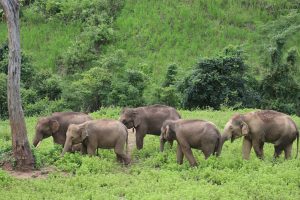
While washing an elephant may seem innocent, World Animal Protection’s head of campaigns Suzanne Milthorpe says activities like washing also require punishment-based training, regular restraint and unnatural visitor interactions.
“Many elephant camps market themselves as sanctuaries or ‘high-welfare’ destinations, but this is far from the reality,” she says. “Genuine sanctuaries would never offer elephant riding or washing experiences.”
And the bad news, says a new report, is that elephant washing and care-taking experiences have become much more common, with 54% of all elephants kept at Thai venues offering either washing or care-taking activities.
Bred To Entertain, which examined the living conditions of 2849 elephants across 236 tourism venues in Thailand across 15 years, also found that 42.7% of elephants are used for rides, though this is a 20% decrease since 2010.
. . . Education
This is where agents have a role to play; Milthorpe says tourists are increasingly avoiding elephant rides because they understand the harm inflicted on the animals. But the report notes an alarming 72% of Kiwis find elephant washing an acceptable activity.
However, Milthorpe says as calves, elephants used for tourism activities are forcibly taken from their mothers and isolated from their families, and are then subjected to cruel training, intended to break their spirit and make them easier to control with tools such as bull hooks, sticks or spears.
At Travel Today, we witnessed some of these practices firsthand while in Thailand with World Animal Protection, and to say it was hard to see would be the understatement of the century.
“When tourists participate in activities that bring them in direct contact with elephants, they unwittingly sustain the cruel practices these animals endure,” Milthorpe says. “We are urging travel companies to implement strong policies to protect wild animals and to stop promoting or selling tickets to hands-on wildlife encounters.”
For agents who have clients that are interested in seeing elephants while in Thailand, there are high welfare observation-only venues that agents can attend, such as Chang Chill and Following Giants. Read World Animal Protection’s Bred To Entertain report HERE, and find more on ethical elephant experiences HERE.